Finally earn what your calling is worth.
As a Weinberg Compass Relationship Coach you can rebuild your mission into the career you dreamed of.
10 weeks to learn a relationship coaching method that works, changes lives, and gets you paid.
Cohort 2 begins January 4, 2027. Applications close December 15, 2026.
Graduates hold the credential Weinberg Compass Certified Relationship Coach, and may use the post-nominal WCC.
What the work can pay
Drag your caseload. Same clients, two different practices.
Working for someone else
$1,440$1,760
a month, at $45–$55 a client
Your own practice, certified
$4,000$9,600
a month, at $125 a session starting out, up to the $300 for 45 minutes Noam charges after thirty years
Rates are Noam’s own, for private practice in the US. A model, not a forecast: four weeks a month, a caseload you actually fill, before tax and expenses. What you earn depends on your market and your own work, and the certification is not a guarantee of clients or income.
Who this is for.
Three kinds of people end up in the room, and the work lands differently for each of them.
Mental health professionals
Therapists, counsellors and social workers who already get handed the marriage and are running on instinct. You want a sequence you can name, and something on paper that says relationships.
Community advocates
Rabbis, educators, and the people who get asked before anyone calls a professional. You want to know what you can work with, and where the line is that you should not cross.
Coaches building a practice
You want a specialization you can charge for, and a method behind it that came out of thirty years of real cases rather than a certification mill.
Good therapists hit a ceiling that has nothing to do with skill.
Your rate has not moved in years.
You have thought about raising it. You also know who would leave if you did, so the only way to earn more stays the same: more hours.
The relationship referrals go to somebody else.
You are good at this. The people who hand out the couples work do not know that about you, because nothing on paper says it.
Your clients feel heard, and nothing changes.
Two years of sessions that go well. The same argument in the car on the way home, and you can feel them starting to wonder.
The certification changes the structure:
A specialization you can charge for.
Not a general practice that also takes couples. A named method you can explain in a sentence, and the practice mechanics to price it.
A credential people can look up.
A listing in the Weinberg Compass directory, so that being good at this becomes something a person can actually find.
Cases that move in weeks.
A sequence you run on purpose instead of improvising, so the change is something your client can point at.
Why now
What a client can get from an app, and what they still need a person for.
A client can open something on their phone at two in the morning and get a clear explanation of their attachment style, a script for the conversation they are dreading, and a plan. Some of it is genuinely good. Your clients are already doing this.
And they still call you. Most couples are not stuck because they are missing information. Press them and they can usually tell you exactly what they should be doing differently. What they cannot do is do it while the other person is sitting there.
Insight got cheap. Sitting with two people while they try to change in front of each other did not.
That is the part of this work that is not going anywhere, and it is the part this certification trains.
Free masterclass
Watch me teach the core idea.
Fifteen minutes on why almost every couple who walks in calls it a communication problem, and what I am actually looking at instead. I will email you the link.
1 course. 10 weeks. Thirty years’ worth of profound takeaways.
Here is a small sample of what you will learn in the course.
Do not answer anxiety with certainty. What to do instead when a client asks whether they should keep dating someone.
Dating With Clarity
Your partner cannot become your nervous system. The regulation a person needs before they are ready to commit to anyone.
Getting Ready for Relationships
Validation without agreement. Most people cannot do the first without feeling they have conceded the second, and it keeps couples stuck for years.
Communication That Actually Works
What is actually underneath the anger, and why the fight a couple describes is almost never the fight they are having.
Fighting Better
Why more pressure produces less influence with a teenager who has already pulled away.
When Your Teen Pulls Away
The content is rarely the real problem. How to map the cycle a high-conflict couple keeps running instead of refereeing who started it.
When the Relationship Becomes the Battlefield
Forgiveness, reconciliation and trust are three separate things. Clients collapse them into one, then cannot understand why nothing holds.
After the Injury
Insight is necessary and almost never sufficient. Getting a client from understanding the pattern to actually doing something different.
The Integrative Relationship Coach
Who is teaching this.
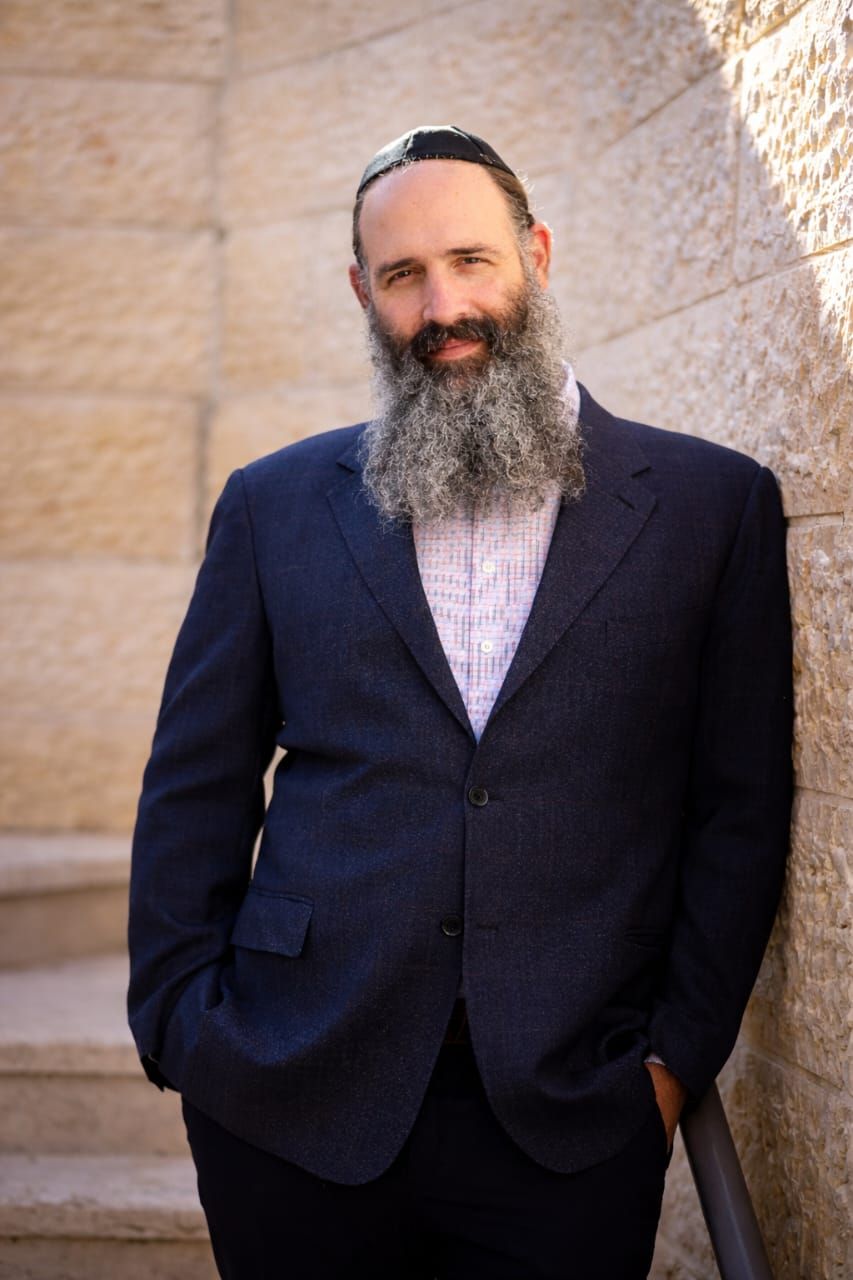
I am Rabbi Dr. Noam Weinberg. For three decades I have sat with people through the defining moments of their lives, as a rabbi, an educator, a school leader and a mentor.
Everyone called what I was seeing communication problems. They were not. Once I stopped treating the argument as the problem, cases that had been stuck for years started moving in weeks.
Most relationship problems are not caused by a lack of love. They are caused by what people do when love feels threatened. Anxiety rises, an old wound gets touched, and they start trying to regulate themselves through somebody else. They pursue, withdraw, control, defend, criticise, over-explain, demand reassurance, shut down, or try to force the other person to change so that they can finally feel all right.
So my job is not to work out who is right. It is to help someone become emotionally adult enough to notice what is happening inside them, settle themselves without making everyone else responsible for it, and then choose how they want to show up.
Underneath it is a belief that healthy relationships need two things people treat as opposites: deep connection and a strong self. I should be able to love you without disappearing into you, hear that you are disappointed in me without collapsing or counterattacking, and tell you the truth without punishing you with it.
That method has brought couples to their engagement, pulled marriages back from the edge, and put families back in the same room.
What the work moves
Reactivity
Responsibility
Blame
Ownership
Control
Influence
Emotional fusion
Differentiation
The goal is not a relationship without tension. It is a relationship populated by stronger people.
People who can feel deeply without being ruled by every feeling, disagree without disconnecting, repair after hurting each other, and keep asking the question that sits underneath all of it: given what I am feeling right now, who do I want to be in this relationship?
Doctorate in education, focus on adolescent psychology and religious developmentMaster's, marriage and family therapyMaster's, secondary education and school administrationPost-graduate certificate, non-profit management, Columbia UniversityRabbinic ordination, RIETSCertified life coachCertified, ACT trauma therapyTrained in Bowen family systems and narrative therapy
Ten trainings. The sequence, in the order I run it.
Thirty years of practice, written down and taught start to finish. Each one moves a client off the question they came in with.
- 01
Dating With Clarity
“Am I attracted enough?”
“Do I actually enjoy being close to this person?”
- 02
Getting Ready for Relationships
“Will this relationship make me happy?”
“Do I have the emotional skills to build something healthy with another person?”
- 03
The Formative Years
“Why isn't my partner doing this the way I expected?”
“How do we build a relationship that works for both of us?”
- 04
Communication That Actually Works
“We need to communicate better.”
“How do we talk so that defensiveness stops being necessary?”
- 05
Fighting Better
“How do we stop fighting?”
“How do we fight in a way that does less damage and reveals more truth?”
- 06
Parenting Adolescents
“Why is my teenager doing this to me?”
“What is developmental here, and how do I move from control to influence?”
- 07
When Your Teen Pulls Away
“How do I get my child back in line?”
“How do I stay an effective parent when I cannot control my child's inner world?”
- 08
When the Relationship Becomes the Battlefield
“Which partner is causing the problem?”
“What keeps happening between them, and what is each one feeding it?”
- 09
After the Injury
“How do we get past this?”
“What has to happen for safety and trust to have any chance of being rebuilt?”
- 10
The Integrative Relationship Coach
“Now I understand why I do this.”
“Now what am I going to do differently?”
The certification, or a piece of it.
The full program is the thing I actually want you in. If you are not there yet, take the piece that matches your caseload.
Everything the price covers
The training
- Ten live trainings with me, one a week for ten weeks
- The full sequence in the order I run it, with the reading and case work between sessions
- A recording of every session, so a week you cannot make live is not a week you lose
Mentorship
- Weekly mentorship with me, not with somebody I certified to teach my method
- Case consultation on the clients you are actually sitting with
- Peer review with the rest of your cohort
The credential
- A written exit project on a real case, assessed by me
- Certification as a Weinberg Compass Certified Relationship Coach
- The post-nominal WCC
After you certify
- A listing in the Weinberg Compass directory, which is public and searchable
- Something specific to say about the work you do, and a method to say it about
What it asks of you
Three to four hours a week for ten weeks, more around the exit project, and at least eight of the ten trainings attended live.
After certification: $99 per month to hold the credential.
Membership keeps your listing in the directory, your place in the certified coach community, and your right to use the credential and badge. Cancel any time. The credential lapses if you do.
Not ready for the full certification?
Four self-serve courses, each one the same method cut to a single kind of client. Knowledge only. No mentorship, no certification, no network.
Singles and dating
$199
Dating anxiety, repetitive patterns, and telling a real red flag from ordinary human imperfection. Plus what readiness for commitment actually means.
Trainings 1 and 2
Get this courseYoung marrieds
$199
The formative years, when the patterns get set. Communication that lowers defensiveness, and how to fight in a way that can be repaired.
Trainings 3, 4 and 5
Get this courseParents
$199
Adolescence as development rather than defiance. Moving from control to influence, and staying connected to a teenager who has pulled away.
Trainings 6 and 7
Get this courseHigh-conflict marriages
$199
The cycle underneath the fighting, and where high conflict ends and coercion begins. Betrayal, disclosure, and whether trust can be rebuilt.
Trainings 8 and 9
Get this course
Questions I get asked.
Is this a license?
No. It is a certificate of completion in my coaching method. It is not a license, not an accreditation, and not a substitute for clinical training or supervision. If you are licensed, this does not extend your license. If you are not, it does not give you one.
Do I need to be a licensed therapist?
No. Most people in the room are licensed, and that shapes the level we work at. But I admit people from other backgrounds where the application and the interview show they can do the work and know where its limits are.
How much time per week?
One live module per week, plus the reading and the case work between sessions. Budget three to four hours a week for the duration, and more in the weeks around the exit project.
What if I miss a session?
Watch the recording and submit a written response before the next module. You need to attend at least eight of the ten live to certify. Miss more than two and you finish the program but complete your certification with a later cohort, at no extra cost.
How do referrals actually work?
Certification lists you in the Weinberg Compass directory, which is public and searchable. I am building the client-facing side of this deliberately and slowly, and I am not going to promise you a flow of clients I cannot yet deliver. What I can tell you is what the credential does: it makes you findable as someone trained in this method, and it gives you something specific to say about the work you do.
How is this different from Gottman or Imago?
Those are excellent and they are clinical trainings built on research programs. This is a coaching method built in thirty years of practice, and it is organised around the sequence I actually run: what the client asks, and the better question underneath it. It is also small. Ten people, taught live, with weekly mentorship from me rather than from a certified trainer.
Guarantee
Sit through the first two modules. If the method is not for you, tell me before the third and I refund you in full. No invoice, no awkwardness.
Three fields. I read every one.
Tell me what you do and who brings you their problems. If it is a fit, you hear from me within 72 hours.
Cohort 2 begins January 4, 2027. Applications close December 15, 2026.